Many good digital tools support survivors of gender-based violence and the people who work with them. They are scattered across countries and languages, and hard to find. The directory at mapping-gbv.tech brings them together, so that organisations can find, compare and build on what already exists.
Three organisations, one project
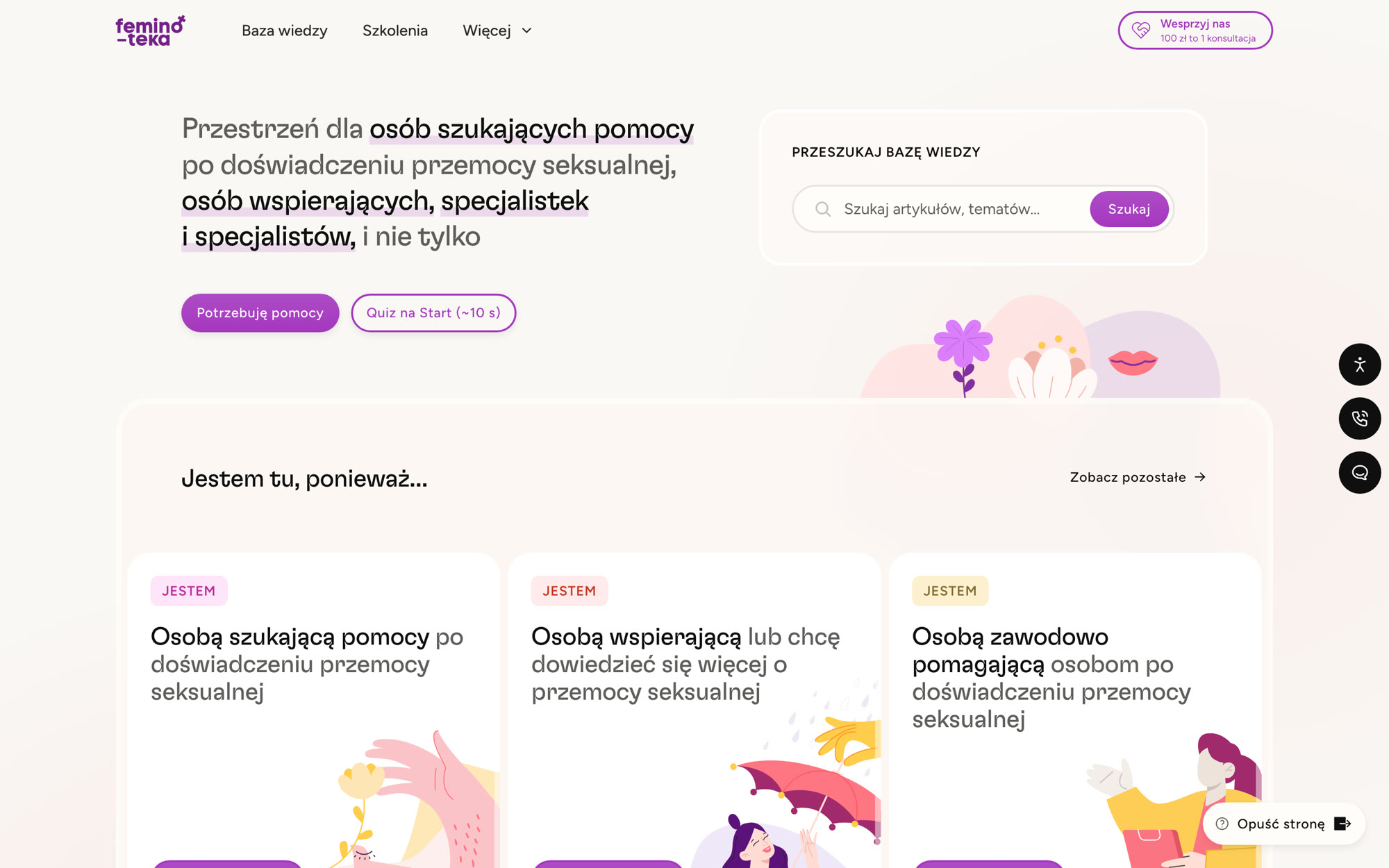
The idea came out of the Digital Futures Gathering in Berlin in October 2025, organised by SUPERRR. Three organisations formed a partnership there to build the directory: Feminoteka from Poland, Heart of Code, a hackspace in Berlin, and Asociación Por Ti Mujer from Spain. An Emergent Collaboration Flash Grant from SUPERRR funds the work.
The three organisations choose the tools, write the descriptions and carry out the assessments. Mutant Unit is the technical partner: we designed, built and launched the site.
Who it is for
The directory is written mainly for specialised support services and for organisations doing educational and advocacy work. Survivors and researchers can use it too.
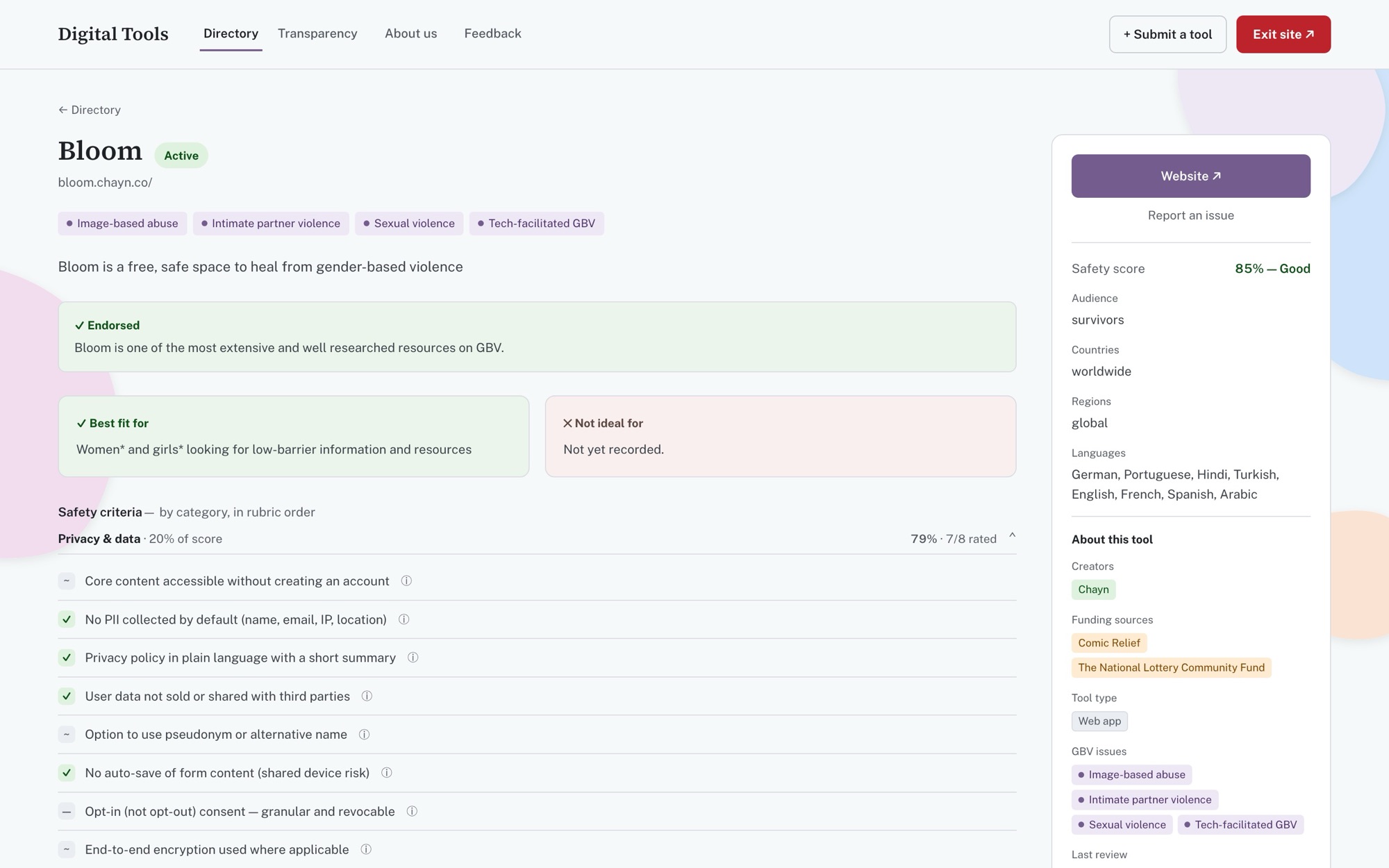
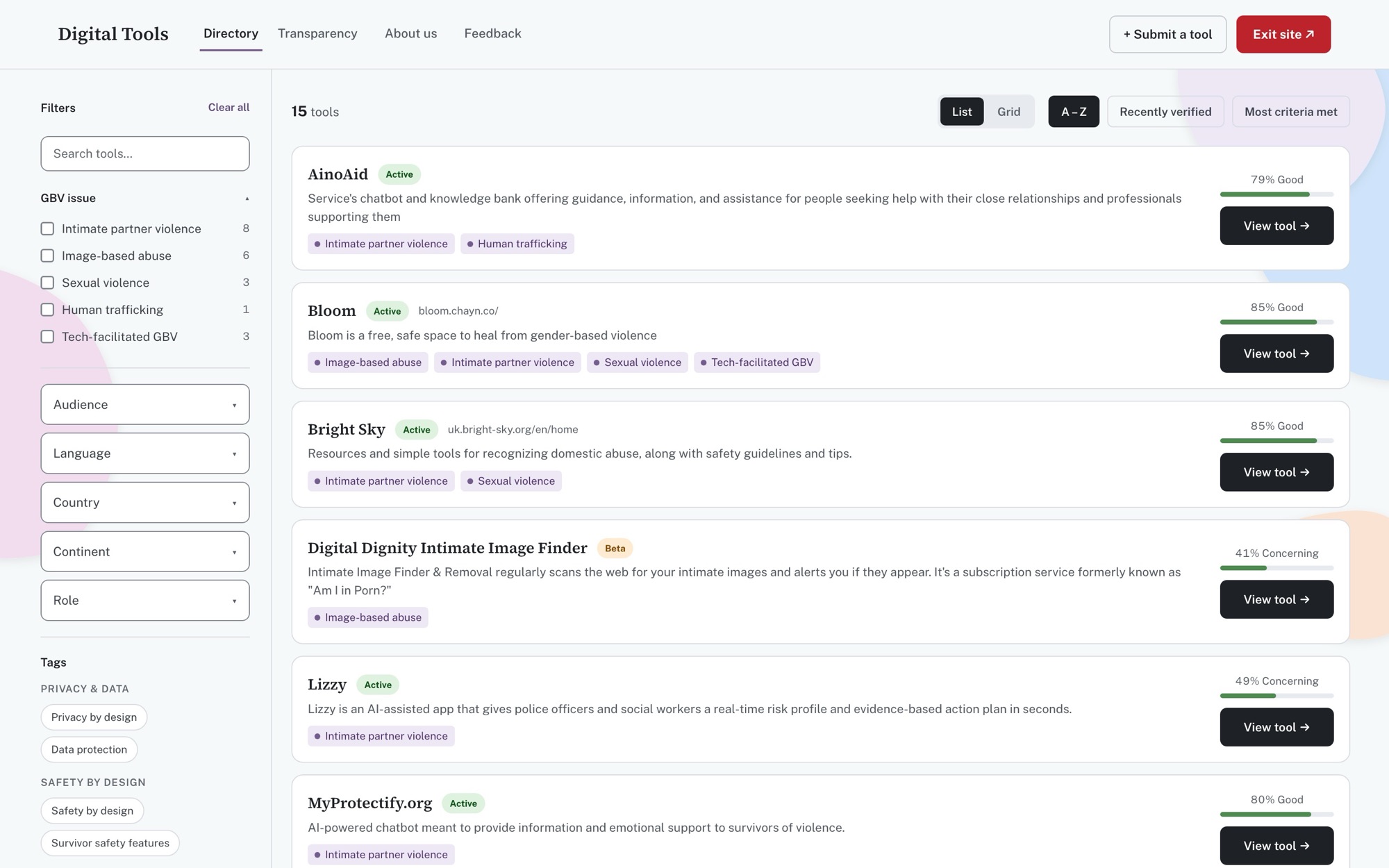
It describes tools from many countries: web and mobile apps, chatbots and services. Visitors can filter them by type of violence, audience, country and language, and by what the tool is for, such as documenting violence, reporting it, or supporting mental health. Each tool has its own page with a description, its creators and funding sources, screenshots and the result of the assessment.
Safety assessment
A tool for people experiencing violence can itself put them at risk, for example by collecting data it does not need. So the partners assess every tool against 49 criteria in eight categories. The criteria draw on Chayn’s work on trauma-informed design, UNFPA guidance and the Feminist Principles of the Internet.
The categories carry different weights. Privacy and data, and safety by design, count for 20% each. Agency and consent, and accessibility and inclusion, count for 15% each. Transparency, and tone and trauma-informed design, count for 10% each. AI ethics and sustainability count for 5% each.
Each criterion is answered yes, partially, no or not applicable. The site turns the answers into a score from 0 to 100 and one of four labels, from “very good” to “concerning”. The reasoning is not hidden: each tool page shows the answers behind its score, and a separate transparency page explains the method.
Built for safety and privacy
- Quick exit A button, or pressing Shift three times, replaces the page with a neutral website. The site says plainly that this does not clear the browser history.
- No accounts, no tracking cookies Fonts are served from the site itself, and visit statistics are collected without cookies.
- Forms that store nothing Anyone can suggest a tool or send a correction. The message goes by email to the editorial team and is not saved on the site.
- Map without an external map service The coverage map is drawn when the site is built, and it works with a keyboard and on touch screens.
The site is designed to WCAG 2.2 AA. Automated tests check colour contrast on every change.
How it works
The editorial team manages tools and assessments in Strapi, a content management system run by the partners. When an editor publishes a change, the site rebuilds itself. A separate, password-protected preview shows drafts before they go public. Visitors’ browsers never contact the content system, only finished static pages.
Search uses Pagefind, which runs entirely in the browser. The site is hosted on Cloudflare Pages and is available in English.
What comes next
The directory keeps growing: the partners add and assess more tools, and anyone can suggest a new one through the form on the site.
Placeholder for a quote from a partner organisation about working on the directory.
Full name role, organisation