Software studio for NGOs and social organisations
Digital tools for organisations that help people.
We design and build websites, apps and AI tools, including educational platforms, directories and training simulators. They are simple to use, and your team updates the content itself.
What we do
From the first conversation to a working tool.
- 1
Content sites and platforms
Knowledge portals, educational platforms, and directories with search and filters. Editors manage everything in a CMS, without touching code.
- 2
Web and mobile apps
Systems with sign-in, forms and data. We connect them to the tools you already use, such as your course platform.
- 3
AI solutions
Conversation simulators, assistants and automation of content work. Experts set the rules, and a person has the last word.
- 4
Quality, accessibility and maintenance
Automated tests, WCAG accessibility and privacy protection from day one. After launch we maintain and develop what we built.
Current work
Content note: sexual violence
-
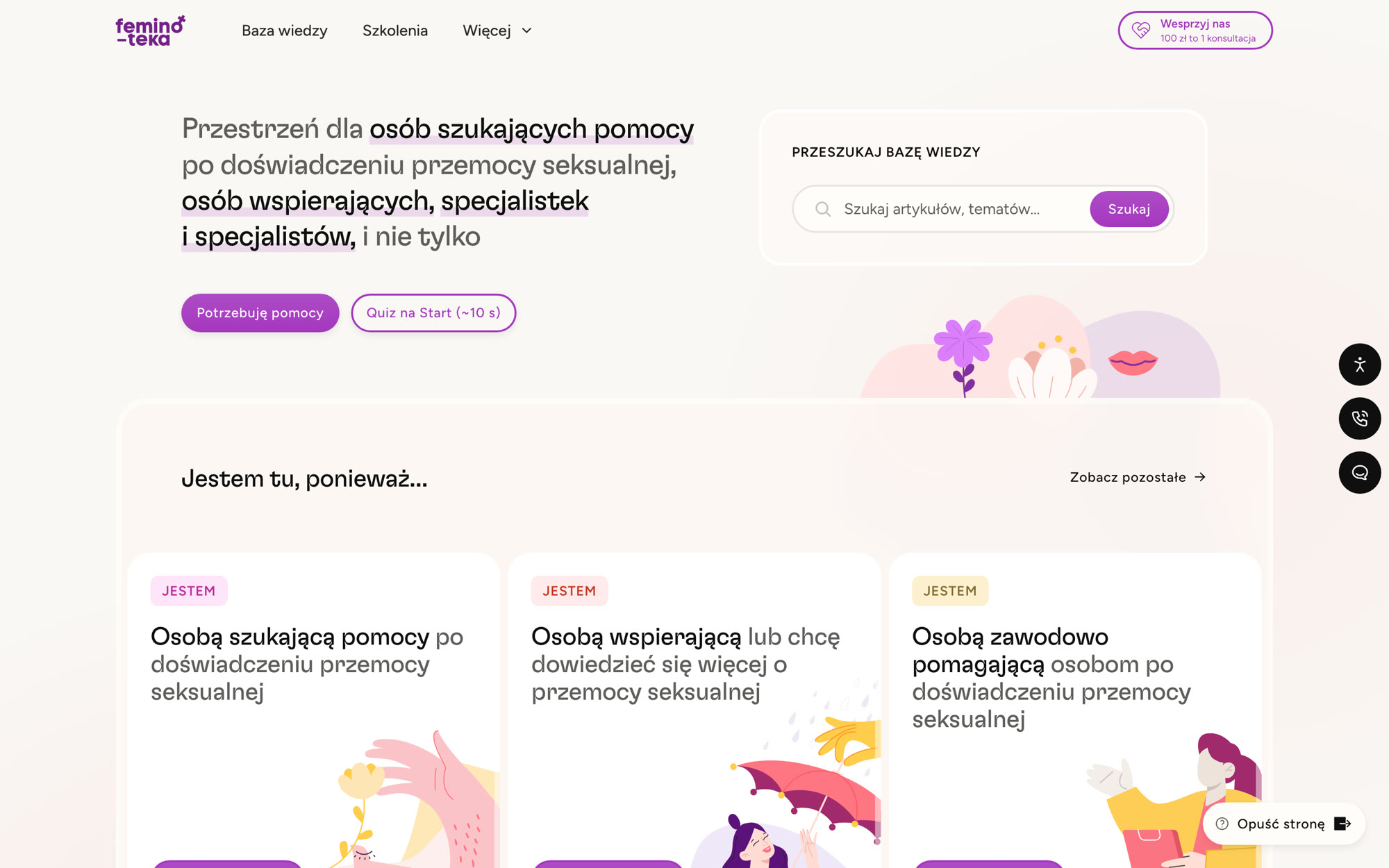 Launching 25 November 2026
Educational platform on sexual violence
A knowledge portal on sexual violence: for people who have experienced it, the people close to them, professionals, and anyone who wants to know more.
Feminoteka Foundation
-
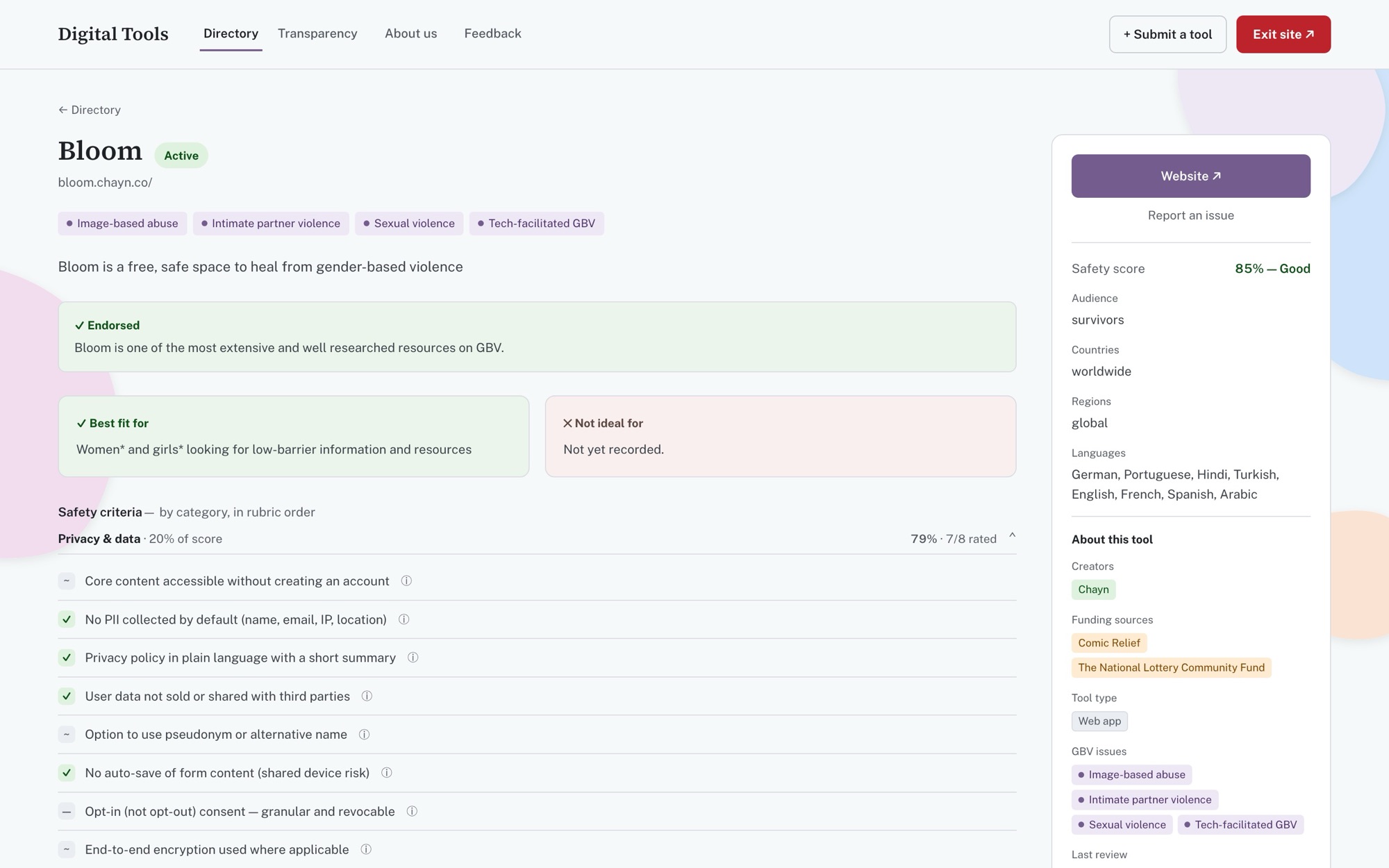 Live
Directory of digital tools for gender-based violence support
An international directory of apps, chatbots and online services that address gender-based violence. Each tool is assessed against a published set of safety criteria.
Feminoteka, Heart of Code and Asociación Por Ti Mujer
- In progress
AI simulator: practising conversations with survivors of sexual violence
Doctors and other professionals practise a conversation with a person after sexual violence. An AI plays the patient, so mistakes hurt no one.
Feminoteka Foundation
Organisations we work with


How we work
What you can expect from us
-
You talk to the people writing the code
No account managers in between. The people who build your product are the ones who agree with you what gets built, and how.
-
We know how grant projects work
We plan around the budget, schedule and reporting deadlines in your grant application.
-
Your team stays in control
Editors manage content themselves. The code is documented, so another team can take it over if needed.
-
Safety and accessibility from day one
Quick exit, no tracking, WCAG AA. For people in crisis these are basic requirements, not extras.
How we start
Working together, step by step
-
Conversation
You tell us what you need and who it is for. We ask about the deadline, the budget and the terms of the grant.
-
Estimate and plan
You get a scope, a schedule and a price. We fit them to the budget and milestones in your application.
-
Building in stages
We show you a working version at regular intervals. You comment as we go and decide what comes next.
-
Launch and care
We train your team to use the editing panel. After launch we maintain the tool, and develop it further if you want.
- How much does it cost?
- It depends on the scope. We can agree a fixed price for the whole project or charge for the time worked. Either way you get an estimate that can go into your grant budget.
- Who owns the code?
- The code belongs to your organisation: we hand it over together with the documentation and the access.
- How much does maintenance cost?
- We give you the hosting and support costs before work starts. They will not surprise you when the grant ends.
Who we are
Mutant Unit builds software for NGOs and social organisations.
Mutant Unit has been in business since 2021. Its founder, Michał Śliwoń, is a developer with 20 years of experience. He has built web and mobile apps in many technologies, including Python, JavaScript (Vue, Angular), PHP and C#, and in recent years he has been building AI solutions. One of them is a system that takes programming tasks from a description to reviewed code, under human supervision. For ten years he also helped run DevConf, a conference for developers.
We combine development with UX/UI design, automated testing and quality assurance. A network of experts in different fields supports us in our projects. They bring the subject knowledge and decide what the product says; we design, build and maintain the software.
Tell us what you're trying to build.
No pitch deck needed. A few sentences on the problem and who it's for is plenty. A person reads every email.